News
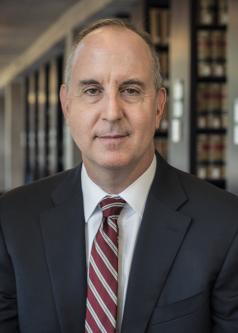
Randall D. Schmidt, clinical professor of law and faculty director of the Law School’s Employment Law Clinic (ELC), has been named by the US District Court for the Northern District of Illinois (NDIL) as a recipient of one of the Court’s 2026 Awards for Excellence in Pro Bono and Public Interest Service.
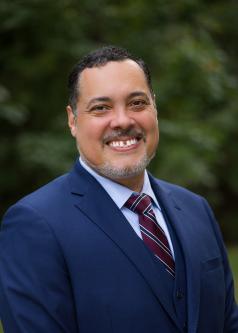
Judge Amir H. Ali came to the United States 20 years ago, as a software engineer on a training visa. He now sits on the bench of the United States District Court for the District of Columbia. Before becoming a judge, he also argued and won three cases before the US Supreme Court, all resulting in landmark civil rights precedents.
In the spring of 1767, an anonymous author published a pamphlet outlining a radical democratic plan of government, one that uniquely addressed women. Within a month, the author revealed herself: English intellectual Catherine Macaulay.
In an era marked by political upheaval and fast-shifting boundaries of government power, 13 leading legal scholars will assemble this Friday, April 17, at the University of Chicago Law School for the Law Review’s 2026 Symposium, “Real Regime Change? Conflict, Change, and Continuity in U.S.
Faculty in the News
In the wake of U.S. President Donald Trump’s threat on social media to destroy an entire civilization ahead of a fragile Iran ceasefire, legal experts are questioning whether such incendiary language can amount to a war crime — even if it is never carried out...
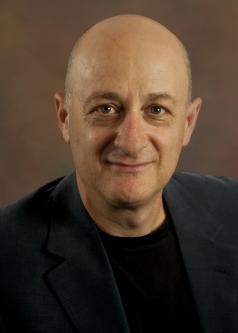
“The U.S. stands out because it historically has aggressively demanded that other countries comply with international law while excepting itself from key provisions and treaties,” Eric Posner, a professor at the University of Chicago Law School, told POLITICO.
During the arguments, the justices cast doubt on Trump’s bid to limit birthright citizenship.
While the concept is relatively are rare around the world, about three dozen countries guarantee citizenship to children born on their territory.
The U.S. as a birthright ‘outlier’
Only a couple dozen countries around the world have birthright citizenship, which Sauer said makes the U.S. “an outlier among modern nations.”
The UChicago Experience
Events
—
Room V
Participating faculty: Tom Ginsburg
—
Room III
Participating faculty: Jacob Goldin, Jonathan S. Masur, Jennifer Nou, Randal C. Picker