Law Review Symposium to Examine Today’s Turbulent Legal Landscape
In an era marked by political upheaval and fast-shifting boundaries of government power, 13 leading legal scholars will assemble this Friday, April 17, at the University of Chicago Law School for the Law Review’s 2026 Symposium, “Real Regime Change? Conflict, Change, and Continuity in U.S. Governance.” The full-day event will examine how the second Trump administration has disrupted—and, in some cases, redefined—the American legal landscape across a wide array of fields.
The conference, organized around three incisive panels, will tackle questions surrounding American authoritarianism, the evolving role of the courts, and the current shape of the structural constitution. Panelists will explore topics including government speech, free elections, bureaucracy, global trade, national security, cultural conflict, and the critical roles of institutions and norms.
Panel I: Theorizing American Authoritarianism
The opening panel will tackle one of the most urgent questions of the day: How did America find itself at risk of authoritarian rechanneling?
In “The Constitution of Dictatorship,” Tom Ginsburg, the Leo Spitz Distinguished Service Professor of International Law, traces how the Trump regime’s anti-regulatory project has turned into an authoritarian one, drawing on Fredreich Hayek’s theories to explain how institutional destabilization unfolded.
In her essay “Trumpian Authoritarianism as Vindication and Indictment of the First Amendment,” Genevieve Lakier, Professor of Law, examines whether Trump’s assault on the American system of free expression has exposed flaws in the First Amendment.
In his essay titled “The Presumption of Regularity During Regime Change,” Darrell A. H. Miller, Harry N. Wyatt Professor of Law, examines how courts should respond when government action upends normal expectations.
Finally, Sonja Starr, the Julius Kreeger Professor of Law & Criminology, explores the Trump administration’s efforts to reshape the federal workforce, documenting instances of the Trump regime’s unconstitutional retaliation against public employees for private speech and how the regime has incorporated improper viewpoint-based conditions in hiring.
Panel II: Role of Courts
The courts’ function in turbulent times is the focus of the symposium’s second panel.
In “The Shadow/Emergency/Interim Docket,” William Baude, the Harry Kalven, Jr. Professor of Law, will examine the shifting practices of the Supreme Court’s interim docket, revealing its growing prominence in legal controversies.
In “Prosecuting Contempt,” Samuel Bray, Professor of Law, and Aditya Bamzai from Virginia School of Law, probe whether judges can constitutionally appoint prosecutors for contempt cases—a question with major implications for executive oversight.
Kathleen Claussen from Georgetown Law chronicles in her essay “Merchant States and Foreign Commerce Federalism” how dozens of states have challenged presidential tariffs and explores the doctrine of foreign commerce and whether states might flex increased regulatory muscle in global markets.
Panel III: What Structural Constitution?
Rounding out the symposium, panelists will examine the deepest structures of American governance.
In “The Constitution of Immigration Law,” Adam Cox from NYU School of Law unpacks three constitutional features that have enabled expansive presidential control over immigration policy, including the plenary power doctrine and the classification of deportation as a civil, not criminal, matter.
In “Executive Power and Government Data,” Bridget Fahey, Professor of Law, and Steven Kochevar, Lecturer in Law and Data Science Institute Law Fellow, reveal how executive control over federal information has expanded and how existing legal mechanisms have failed to curb it.
Aziz Huq, the Frank and Bernice J. Greenberg Professor of Law, in “Contemplating the Death of a Constitution” proposes new frameworks for gauging constitutional health.
Finally, Jennifer Nou, the Ruth Wyatt Rosenson Professor of Law, in “The Para-Presidency” examines emergent quasi-executive power—such as special advisors and the Department of Government Efficiency—that operate alongside and beneath the formal presidency. She argues that the para-presidency is a distinct modality of governance insulated from discipline.
As the US faces ongoing disruption under the second Trump regime, the symposium offers insights about current turmoil and legal continuity—inviting practitioners, students, and scholars to consider how regime change is remaking American governance.
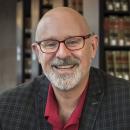
Tom Ginsburg
Leo Spitz Distinguished Service Professor of International Law, Ludwig and Hilde Wolf Research Scholar, Professor of Political Science, Faculty Director, Malyi Center for the Study of Institutional and Legal Integrity, Faculty Director, Forum for Free Inquiry and Expression
Genevieve Lakier
Professor of Law, Herbert and Marjorie Fried Teaching Scholar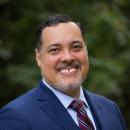
Darrell A. H. Miller
Harry N. Wyatt Professor of Law
Sonja B. Starr
Julius Kreeger Professor of Law & Criminology
William Baude
Harry Kalven, Jr. Professor of Law, Faculty Director, Constitutional Law Institute
Samuel L. Bray
Professor of Law, Walter Mander Research Scholar
Bridget Fahey
Professor of Law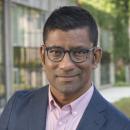
Aziz Z. Huq
Frank and Bernice J. Greenberg Professor of Law