News
The 2026 Ulysses and Marguerite Memorial Schwartz Lecture drew an overflowing crowd of students on April 21 to hear from Justice Ben Kioko, former judge and vice president of the African Court on Human and Peoples’ Rights.
After months of rigorous elimination rounds that began back in October, four students made it to the final round of the Edward W. Hinton Moot Court Competition on April 16. The finalists delivered their arguments in two-person teams before a panel of three federal judges.
Richard Posner’s towering influence on modern legal thought was the focus of the Law School’s recent Chicago’s Best Ideas lecture, which typically features one professor presenting a single novel legal idea. This special edition, however, was part of a daylong celebration on April 23 marking the installation of the first Richard A.
At a moment of political polarization, funding uncertainty, and limited public understanding of environmental justice, Charles Lee delivered a clear message at the Law School: meaningful change remains possible—and often begins with small groups.
Faculty in the News
Democracy holds elections. But what makes them meaningful? In an era of polarization, algorithmic amplification, elite capture, and institutional distrust, Gita Wirjawan conversation with Tom Ginsburg asks a deeper question: what sustains constitutional democracy, and what erodes it from within? From Southeast Asia’s dramatic transformation since the 1980s to the rise of authoritarianism at home, this episode weaves these threads together to examine the institutional architecture that makes freedom possible.
“It’s Halloween, and somebody is going to die tonight.” Those were the chilling words of a Chicago gang member who made good on his threat by firing a hail of bullets into a car on Halloween night in 2009 in Chicago’s Humboldt Park neighborhood. A passenger in the car was shot multiple times and died. It’s a tragedy we sadly see all too often in Chicago. It also was entirely preventable.
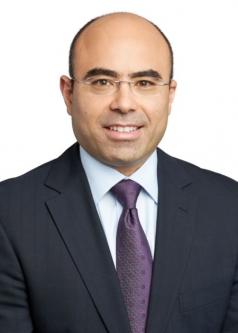
Nicole Hallett, a professor at the University of Chicago Law School and director of the Immigrants’ Rights Clinic, says she believes the policy is designed to discourage people from immigrating legally. “I think it’s exactly what the administration wants,” she says. “They want people to decide not to come.”
Hallett says the visa pause should not be viewed in isolation, but as part of a wider set of actions aimed at narrowing legal pathways into the country. “What the administration is doing now is the opposite, which is illegalizing lawful immigrants,” she says.
The UChicago Experience
Events
—
Participating faculty: Curtis A. Bradley, William Baude, Bridget Fahey, Diane P. Wood, Samuel L. Bray, Darrell A. H. Miller