Abrams Environmental Law Clinic—Significant Achievements for 2024-25
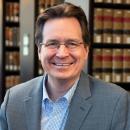
The Abrams Environmental Law Clinic attempts to solve some of the most pressing environmental problems throughout Chicago, the State of Illinois, and the Great Lakes region. On behalf of clients, the clinic challenges those who pollute illegally, fights for stricter permits, advocates for changes to regulations and laws, holds environmental agencies accountable, and develops innovative approaches for improving the environment. The Clinic is directed by Clinical Professor Mark N. Templeton. Bellow are its significant achievements for 2024-25.
Protecting Our Great Lakes, Rivers & Shorelines
The Abrams Clinic represents Friends of the Chicago River and the Sierra Club in their efforts to hold 401 N. Wabash LLC, the operator of one of the largest hotel and condominium buildings in downtown Chicago, accountable for withdrawing water illegally from the Chicago River. To cool the facility, the building draws water at high volumes, similar to industrial factories or power plants, but the facility operated for more than a decade without ever conducting the legally required studies to determine the impact of those operations on aquatic life or without installing sufficient equipment to protect aquatic life consistent with federal regulations. After the Clinic sent a notice of intent to sue the building’s operator, the State of Illinois filed its own case in the summer of 2018 in Cook County Chancery Court, and the Clinic’s clients moved successfully to intervene in that case.
In September 2024, Judge Thaddeus L. Wilson ruled in favor of the State’s and Plaintiff-Intervenors’ motions for summary judgment, finding that the facility violated and is in violation of the Illinois Environmental Protection Act and committed a continuing public nuisance through a series of failures to comply with state and federal law dating back to 2008. The judge ruled that the evidence was uncontested by the facility and ordered a trial on the appropriate injunctive relief and civil penalties. Working with co-counsel Albert Ettinger and Northwestern University’s Pritzker Law School’s Environmental Advocacy Center, Clinic students and the State drafted and filed five motions in limine to prequalify an expert and exclude evidence the facility’s operator intended to present. They also defended five similar motions filed by the defendant. In early 2025, the State and the Plaintiff-Intervenors won almost all of their motions and did not lose any.
In May 2025, the facility’s operator, the State, and Plaintiff-Intervenors entered into a proposed consent order to resolve the case. The facility’s operator agreed to cease its illegal killing of aquatic life, bring its water intake structure into compliance with the Clean Water Act (CWA), and to pay $1.5 million in penalties to the State, $300,000 in attorneys fees, and $3 million toward a Supplemental Environmental Project (SEP). Plaintiff-Intervenor Friends of the Chicago River will administer and implement the SEP to create new fish habitat in the Chicago River and mitigate the harm to fish and other aquatic life caused by years of violations. The $4.8 million total appears to be the largest Clean Water Act settlement in Illinois state court history. On June 30, 2025, Judge Wilson approved the proposed consent order. Now, Plaintiff-Intervenors and their attorneys will work to ensure that the facility secures a legally-compliant permit and that the river restoration projects are implemented successfully.
As the case against 401 N. Wabash reached its conclusion, students began investigating and profiling other entities that have multiple “significant violations” of the water protection provisions of federal and state environmental laws. The Clinic started conversing with partners about addressing this recurring illegal conduct.
Energy and Climate
Energy Justice
The Abrams Clinic supported grassroots organizations advocating for energy justice in low-income communities and communities of color in Michigan. With the Clinic’s representation, these organizations intervened in cases before the Michigan Public Service Commission (MPSC), which regulates investor-owned utilities. Students conducted discovery, drafted written testimony, cross-examined utility executives, participated in settlement discussions, and filed briefs for these projects. The Clinic has elevated the concerns of these community organizations and forced both the utilities and regulators to consider issues of equity to an unprecedented degree. This year, on behalf of Soulardarity (Highland Park, MI), We Want Green, Too (Detroit, MI), and Urban Core Collective (Grand Rapids, MI), Clinic students engaged in four contested cases before the MPSC against DTE Electric, DTE Gas, and Consumers Energy, as well as one case before the Michigan Court of Appeals, and provided support for our clients’ advocacy in other non-contested MPSC proceedings.
The Clinic started the year with several significant wins in a rate case with the gas utility encompassing most of Michigan, DTE Gas Company. First, the Commission rejected numerous requests by DTE Gas to charge ratepayers for investments expanding its gas distribution system during a time when Michigan needs to prepare for the transition away from fossil fuels, approving less than half the rate increase requested by the company. The Commission has disapproved hundreds of thousands of dollars that the company asked to recover for “Responsibly Sourced Gas,” gas extracted through a process alleged to limit its environmental impact at production, but whose actual environmental benefits are dubious at best. Based on the arguments of the Clinic and other intervenors, the Commission also reduced DTE Gas’s return on equity, or the amount of profit the company’s shareholders received for capital investments. This decision was the first time the Commission had reduced a major energy utility’s return on equity in many years. It marked a substantial win for ratepayers and the energy transition, as such a cut reduced the utility’s incentive to invest in the gas distribution system. Furthermore, the Commission agreed with the Clinic and other intervenors that DTE Gas needed to account for the energy transition explicitly, and the Commission required the company to do so in its next case requesting a rate increase.
In the winter, the Clinic saw one of its most substantial successes. In previous cases, the Clinic and its clients argued that Consumers Energy Company needed to address inequitable differences in grid reliability between environmental justice and non-environmental justice communities. The company had denied that inequities existed after comparing performance in environmental justice communities against systemwide averages. However, comparing energy reliability in environmental justice communities to the systemwide average masks inequities, because the lower reliability scores for rural areas, where few environmental justice communities are located, bring down systemwide averages. When the company changed its analysis to compare urban environmental justice communities to urban non-environmental justice communities—as the Clinic and its client had argued in a previous case—the results showed the disparity between reliability in environmental justice communities and non-environmental justice communities. As a result, the company proposed approximately $500 million in incremental investments in the grid in environmental justice communities during the next ten years to correct the disparities.
When the Commission issued its order in the Consumers Energy rate case in the Spring, the Clinic would see several further wins. First, the Commission announced that, upon arguments put forward by the Clinic, the Commission would initiate a broader discussion with utilities across Michigan to address increasing heat-related deaths and amend the required extreme weather utility regulations that limit when utilities can shut off customers’ power. The Commission also required the company to meet with stakeholders to receive input from stakeholders, including the Clinic’s client, on the company’s community solar proposal. In another rate case, this one stemming from a rate request from the electric utility in the eastern half of Michigan, DTE Electric, the Clinic had similar wins, including (1) the rejection of DTE Electric’s request to recover over $10 million in investments in a self-serve website at the expense of the company’s customer help call centers, (2) additional requirements that the company invest in its infrastructure in residential neighborhoods instead of just the Detroit business district, and (3) requirements that DTE Electric mitigate the negative impacts of the shift away from a low-income energy rate and towards a time of use rate that could harm thousands of customers unable to shift their energy use to off-peak times.
In addition to these rate case interventions, the Clinic also intervened on behalf of our clients in a Voluntary Green Pricing (VGP) Case filed by DTE Electric. In that case, students worked with members of the Detroit-area community to draft testimony filed before the Commission. These community members argued that DTE is delaying the creation of any community solar projects in the community by (1) slow walking commitments made by the company to develop three community solar projects in low-income communities and (2) refusing to provide a fair tariff that would allow third parties to fund, construct, and connect their community solar arrays to the grid. Students drafted multiple briefs advocating for low-income and BIPOC communities to have access to community solar.
As these cases were ongoing, the Clinic continued its appeal of the previous year’s VGP case. In the summer of 2024, the Clinic filed an appeal of the Commission’s order in DTE’s 2022 VGP case, alleging that the Commission had failed to address several legal issues raised by the Clinic in its advocacy in the regulatory proceeding, and that the Commission’s order was thereby unlawful under the Michigan Administrative Procedure Act and the state constitution. Over the past year, clinic students drafted the initial brief and the reply brief to the Commission’s and the Company’s briefs. The Clinic is currently waiting for the case to be assigned to a panel before the case moves forward.
The Clinic also assisted its clients outside the Commission’s contested cases. Students advised clients regarding structuring their relationship with a nonprofit to oversee funds for weatherization, energy efficiency upgrades, renewable energy, and battery technology for homes in low-income communities. The Clinic also successfully assisted our client in requesting funding from the Utility Consumers Participation Board, a state organization that funds groups representing residential customers before the Commission, for its interventions in regulatory proceedings. This award is the first time our client will receive payment for their efforts, which will allow them to expand their regulatory advocacy.
Finally, both DTE Electric and Consumers Energy have filed additional requests for rate increases after the conclusion of their respective rate cases filed in 2024. On behalf of our Clients, the Clinic has intervened in these cases, and clinic students have already reviewed thousands of pages of documents and started to develop arguments and strategies to protect energy justice communities from the utility’s ceaseless efforts to increase the cost of energy.
Land Contamination, Lead, and Hazardous Waste
The Abrams Clinic continues to represent East Chicago, Indiana, residents living on or adjacent to the USS Lead Superfund site. This year, the Clinic continued challenging the poor performance and permit modification and renewal attempts of Tradebe Treatment and Recycling, LLC (Tradebe). Facility reports from the US Environmental Protection Agency’s (EPA) Toxic Release Program (TRI) indicate that Tradebe is the leading emitter and handler of hazardous waste in Lake County, when adjusted for risk. US EPA and the Indiana Department of Environmental Management (IDEM) have notified the company of hundreds of violations in the past five years. This year, Clinic students drafted and filed an extensive and detailed comment on problems with a proposed renewal and modification of the Company’s Resource Conservation and Recovery Act Permit; while the Clinic, its clients, and its allies did not secure all of the changes they requested, IDEM did impose additional requirements on the company in the reissued permit. In addition, Clinic students commented on a draft Clean Air Act (CAA) permit revision, noting the need for additional air pollution controls and offsets; the Clinic and its clients are awaiting IDEM’s response. Clinic students supported the participation of clients and allies in public meetings for the RCRA and CAA permits and produced press releases to draw attention to problems with the permits. Clinic students invested significant time working on the details of potential legal challenges. Finally, the Clinic and its clients also joined comments drafted by other environmental organizations about poor operations and loose regulatory oversight of several industrial facilities in the area.
Endangered Species
The Abrams Clinic represented the Center for Biological Diversity (CBD) in litigation regarding the US Fish and Wildlife Service’s failure to list the Brooke Floater Mussel as threatened or endangered under the Endangered Species Act. The mussel is a small, strictly riverine species of mussel historically native to the east coast of the United States and Canada in an area referred to as the Atlantic slope. Development and climate change have undermined large portions of the mussel’s habitat, and populations are declining. Accordingly, the Clinic sued the US Fish and Wildlife Service in the US District Court for the District of Columbia last spring over the Service’s denial of CBD’s request to have the Brooke Floater Mussel protected. The Clinic is currently awaiting the US Department of Justice’s answer.
The Clinic also provided legal support to CBD in preparing an amicus brief relating to protecting another species in a separate proceeding. The Clinic also supported local counsel in that proceeding as part of CBD’s advocacy.
Students and Faculty
Twenty-nine law school students from the classes of 2025 and 2026 participated in the Clinic. Students secured ten clerkships, five are heading to private practice after graduation, and two are pursuing public interest work. On June 30, Clinical Fellow Sam Heppell departed the Clinic to assume a clinical teaching position at the University of Utah Law School and start a medical-legal partnership clinic there. Clinic Director Mark Templeton continues his service on the boards of the Environmental Law Institute, the Conservation and Policy Council of the Forest Preserves of Cook County, and the Gaylord and Dorothy Donnelley Foundation. Director Templeton also served as co-organizer and was a presenter at Ecological Matters: Experimental and Legal Interventions into Climate Change in East Asia, held at the University’s Hong Kong Center, and he moderated the University’s Harper Lecture At a Boiling Point: Human Rights in the Face of Climate Change in San Francisco. Clinic Fellow Jake Schuhardt serves on the Illinois State Bar Association’s Environmental and Natural Resources Law Section Council.