Inside the Law School’s AI Lab
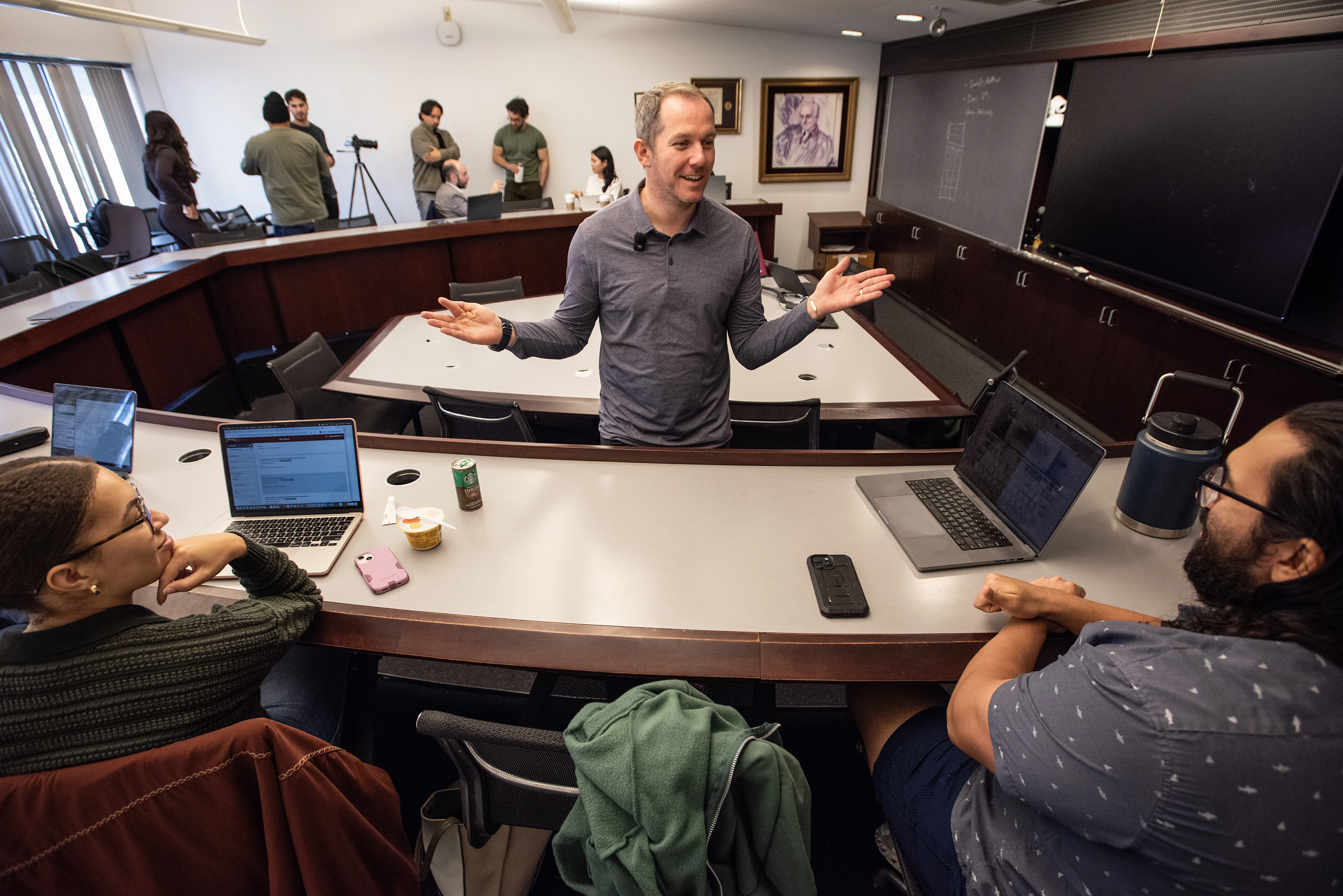
Marley McAliley, ’27, a former public relations professional at Google, didn’t imagine when she pivoted to law school that she’d be writing PR pitches for a tech product as part of one of her classes as a law student. But that’s exactly what she did in Autumn Quarter of 2025 in the Law School’s inaugural AI Lab, a first-of-its-kind workshop designed to teach law students how to build and distribute an AI-powered legal tool.
The tool they built was LeaseChat, a generative AI chatbot that helps renters understand their lease agreements and legal rights as renters. Released to the public last December, LeaseChat is available for free, filling an access-to-justice gap for people who can’t afford an attorney, but who would benefit from legal help to navigate landlord/tenant laws, which differ across states, cities, and counties.
The workshop was led by SixFifty CEO Kimball Dean Parker, ’13, a legal tech entrepreneur who is passionate about finding ways to harness technology to improve business as well as people’s lives. “There are 40 million rented properties in the United States, so the impact of a tool like this is huge,” Parker said.
A Student-Led Project
McAliley dabbled with AI when she was working at Google and that piqued her interest in the emerging technology. One of the things that led her to law school was a desire to help fix disparities in economic and social issues she cared about. This interest in AI and passion for social justice made the AI Lab especially enticing to her. It was an opportunity to gain a deeper understanding of AI and how to leverage it in the legal space for the public good.
“I was inspired to see that at a prestigious school like UChicago that is so often focused on doctrine and research, I had this opportunity to make a positive impact in my community in this very tangible way,” she said. “Having this experience in law school was personally important to me.”
“It was really exciting and rewarding to be able to utilize my previous professional experience. That’s one of the things that I love about the Law School: the students here are all incredible; we all come from very diverse backgrounds and bring such different things to the table.” Marley McAliey, '27
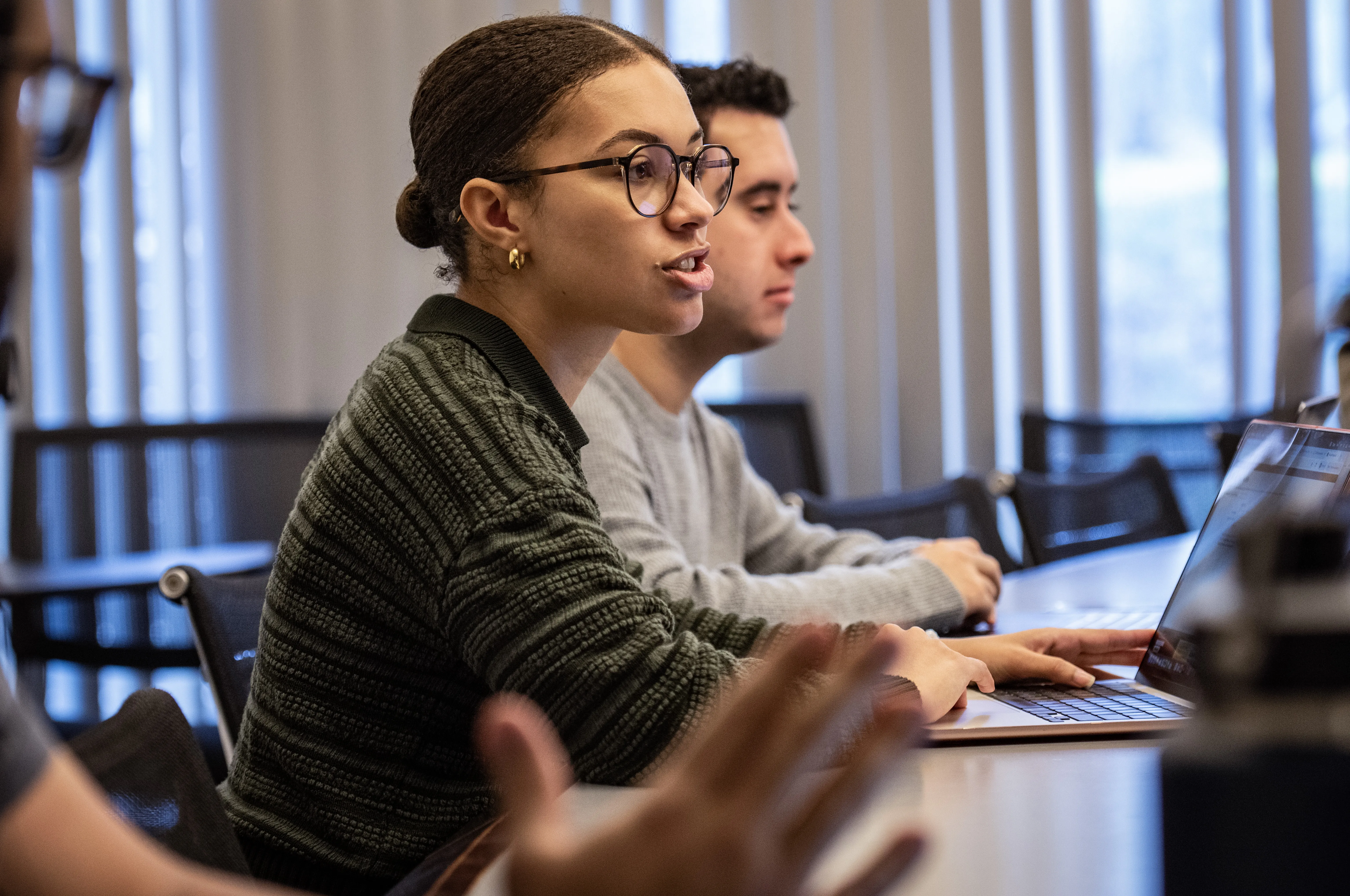
Alfredo Taboada, LLM ’26, was interested in the AI Lab for a similar reason. He wanted to learn how to apply AI to the law to help create positive change. A lawyer in private practice in Colombia, Taboada sees himself eventually working in the Colombian government and envisions AI playing a role in that future chapter. “I feel that a lot of issues in the public sector . . . general inefficiencies, bureaucratic corruption . . . can be solved through artificial intelligence,” he said. “The possibilities are extremely exciting to me, so I was eager to explore them.”
Unlike McAliley, Taboada arrived at the AI Lab with little AI experience. He thought the class would be a programming boot camp of sorts, but it ended up exceeding his expectations. “Kimball ran the class like a start-up,” he said. “Every class felt like a team meeting. He assigned each of us a responsibility based on our unique skills and backgrounds.”
McAliley agreed. “One of the many things I learned from Kimball was how to be an effective leader. He identified everyone’s strengths and trusted each person’s expertise to do their part of the job. That’s something I’m going to take with me in my future career,” she said.
When Parker learned that Adan Ordonez, ’27, a former professional baseball player, knew how to code, he quickly empowered Ordonez to take the lead in that lane. Parker reflected: “Hopefully this was one of the lessons the students took from the class—to lean into what you're good at.”
Ordonez built the prototype—using AI tools—in just a few days, which came as a surprise to everyone in the class, including Parker. A self-taught programmer, Ordonez brought a wealth of technical knowledge and prior experience building tech tools to the AI Lab. Last year, he created LawBandit, a law school study app, which he uses himself, and which he says has at least 500 users to date. He first began solving problems using technology while serving as a player development coach for the Philadelphia Phillies. There, he focused on using player metrics to help improve player performance.
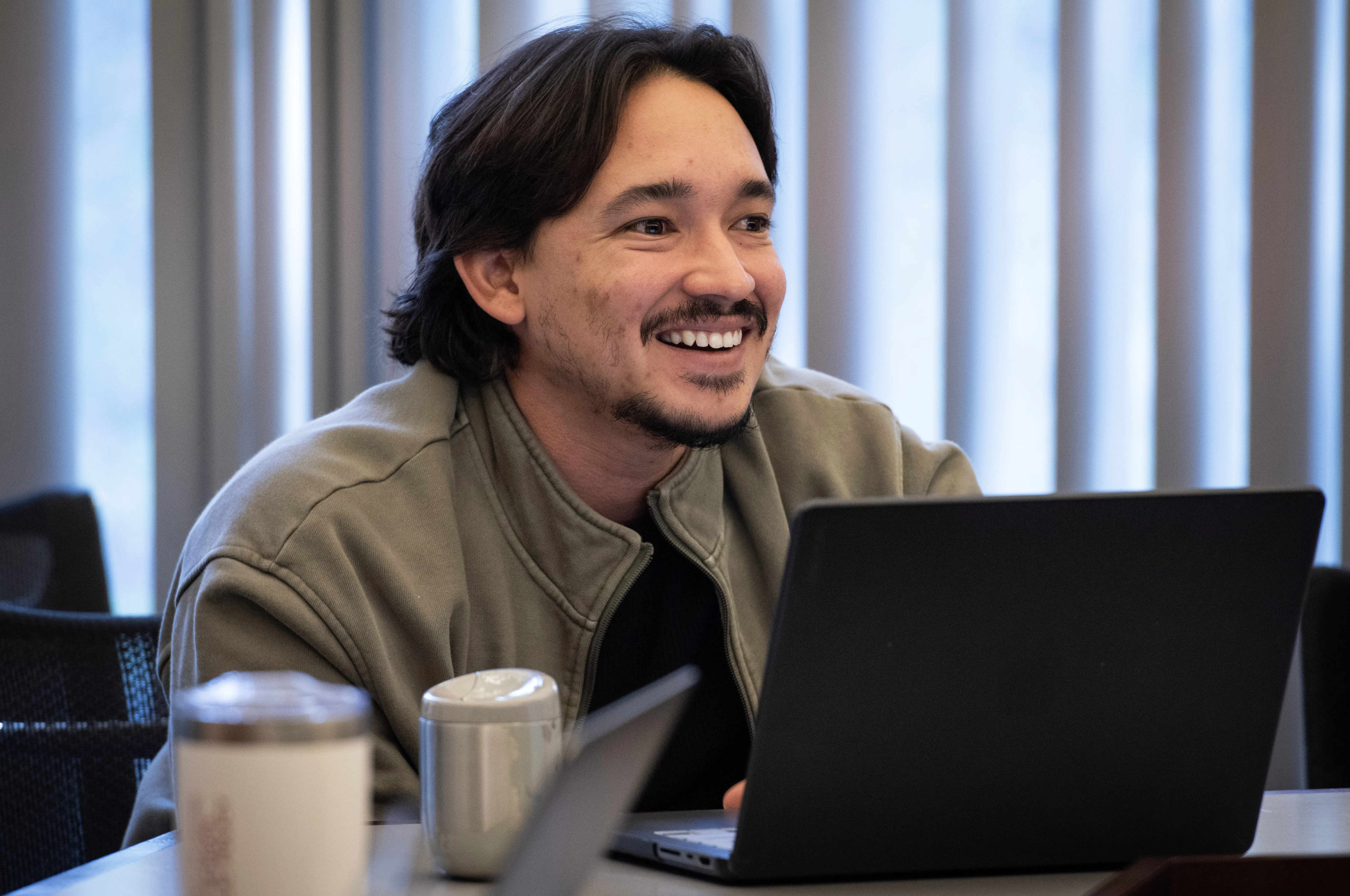
"If you become an expert at using AI tools and you are an expert in the law, you will have double the weapons to work faster and more efficiently." Adan Ordonez, '27
He also founded a start-up in 2022 focused on helping real estate investors underwrite deals. Its launch was not successful, he said, because he did not know how to handle the distribution part of the business. That was one of the things he learned from the AI Lab, he said—the different ways to execute distribution.
“I come from a family of entrepreneurs,” shared Ordonez, “and I came to law school because I thought learning the law would help me and my family’s business. Now that I’m here, I feel that so many doors have opened for me that I didn’t know existed, like the idea of pursing a career in law and tech.”
Learning by Doing
Like a start-up, the AI Lab had a few strategy pivots over the course of the quarter. One was to lean into general AI reasoning models for the tool’s output, and to focus instead on improving the tool’s prompt engineering, a process of optimizing and refining instructions given to a large language model (LLM).
The original plan was to layer AI over a legal database that the class would meticulously build so that the tool would pull information from the database for increased accuracy. A heated debate ensued over which route to take—trust AI to deliver accurate output, or have it draw responses from their carefully curated database?
“Ultimately it was decided that we did not see significant accuracy gains when we used AI over our database,” said Parker. As the quarter unfolded, OpenAI released an updated version of ChatGPT and Google released Gemini, and those advancements had cut down hallucinations, or output errors. A conversation Parker had with UChicago Professor James Evans, who has been researching why the most recent LLMs are so accurate, was also part of what swayed the decision.
Another pivot was related to distribution. At first, the class sought out partners who could connect LeaseChat to its intended users. It was one of the tasks Taboada was assigned to. “I contacted multiple organizations and even reached out to social media influencers,” he said. When that strategy did not yield results, they shifted to a marketing approach.
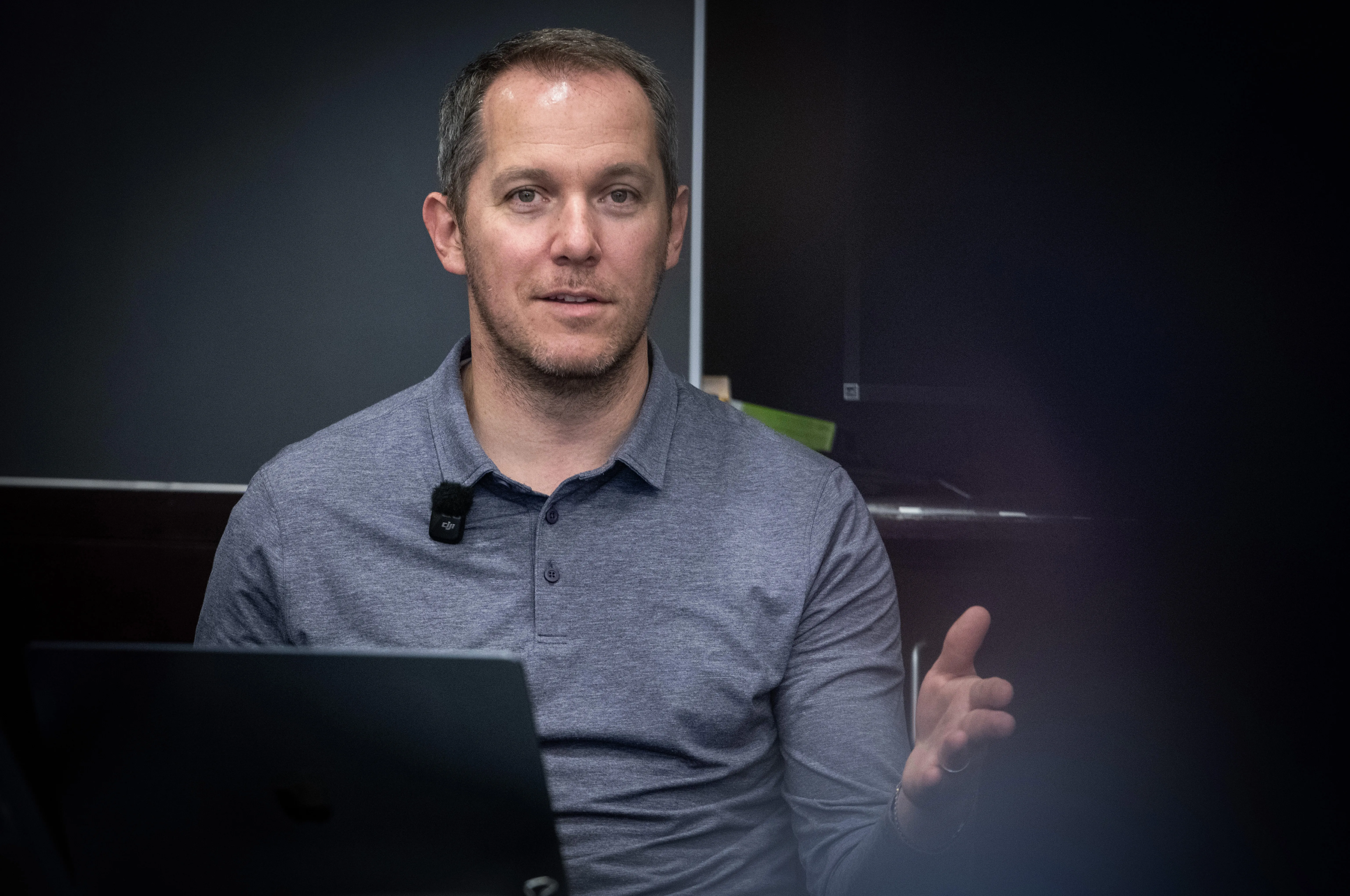
"I didn't grow up with AI... My students, though, view AI differently. It's the technology they used in undergrad and in their jobs before law school. They are much more AI native. And their view of how to use AI is much more expansive." Kimball Dean Parker, '13
Because of her background, McAliley became responsible for developing a PR strategy for their tool. She compiled a media list, wrote PR pitches, and then successfully got the attention of NBC News Chicago and Telemundo Chicago. In December, both channels ran a segment about the AI Lab’s LeaseChat. McAliley coordinated NBC’s camera crew visit to the Law School.
“It was really exciting and rewarding to be able to utilize my previous professional experience,” she shared. “That’s one of the things that I love about the Law School: the students here are all incredible; we all come from very diverse backgrounds and bring such different things to the table.”

Thinking about the Future of AI and the Law
Amidst so much hysteria surrounding AI and its implications, McAliley said that the AI Lab debunked certain myths for her. For one, it showed her that as powerful as AI is, it cannot entirely replace the need for an attorney.
“It can help fill some gaps and empower people to understand the law better, but it can only take you so far,” she said. “With LeaseChat, we had to make it very clear that the tool does not provide legal advice, it can only offer legal information, and that’s an important distinction,” she said.
The class solidified her resolve to continue seeking opportunities to become more AI proficient—because the technology, she said, is inevitable: “I’m realizing that it’s crucial to make sure you are positioning yourself to use it well and use it responsibly. It’s something we need to address head on and not shy away from.”
McAliley is currently getting a taste of how relevant AI is for corporations and in-house lawyers through her research projects in the Law School’s Kirkland & Ellis Corporate Lab. “We have received multiple research requests from various clients related to AI licensing and other AI issues,” she shared. All of this has inspired McAliley to consider a career path in law and technology.
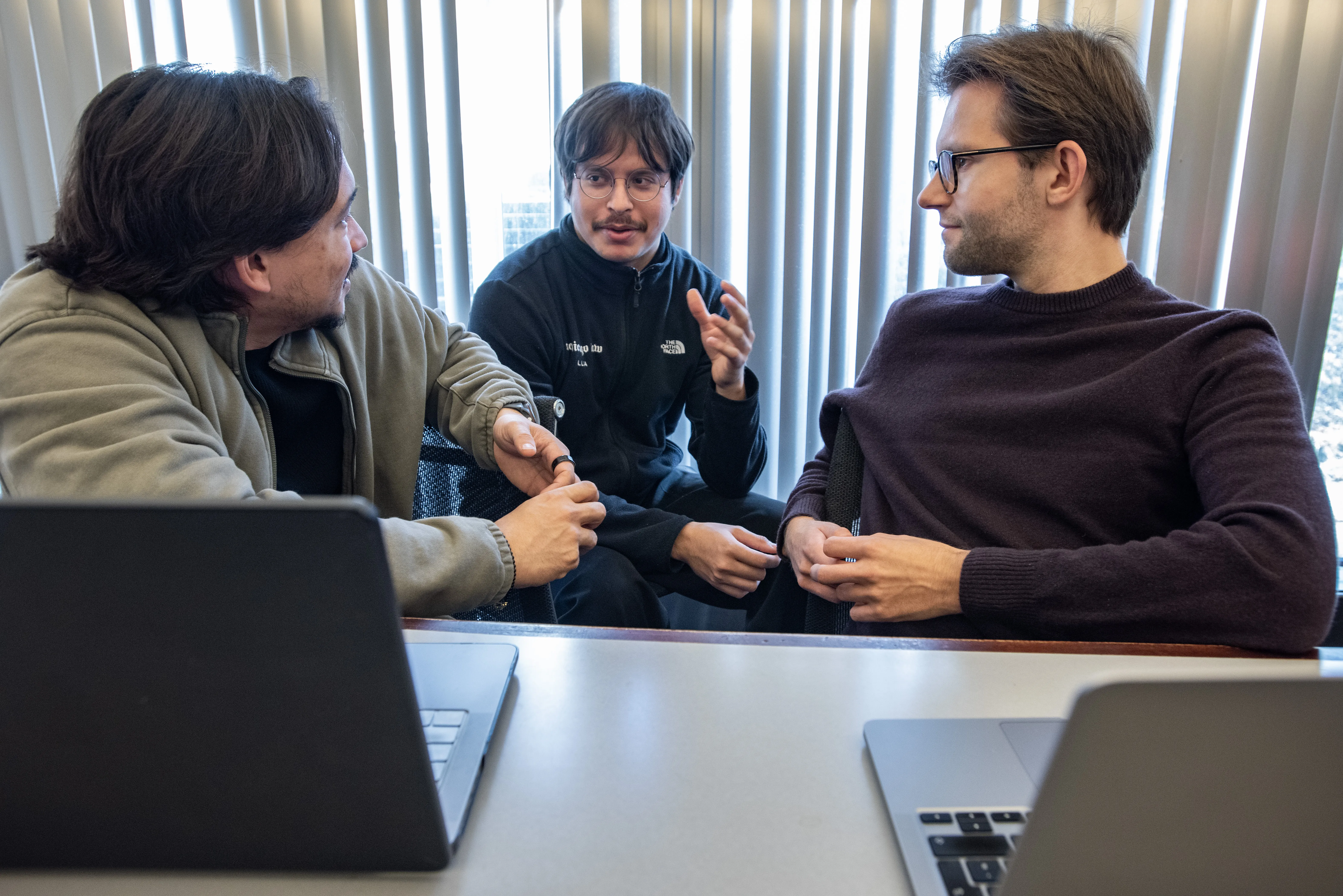
For Ordonez, the class opened his eyes to the big difference he can make in the legal field using AI. Building LeaseChat boosted his confidence in his tech skills and helped him see how those skills can work in a legal context—but it also showed him what it was like to work with people who possess different levels of familiarity with the technology.
“Not everyone knows what a prompt is or how AI works,” he said. “Because of my background, I think I took my knowledge for granted. But it also affirmed how important it is to have that [AI] knowledge and how much value it can add.”
Ordonez is enrolling in UChicago’s JD/MBA program in the fall and is already taking another AI-topic class at the Law School this quarter. He’s also working on a law student journal comment for the University of Chicago Law Review on how courts should handle AI and attorney-client privilege.
“If you become an expert at using AI tools and you are an expert in the law, you will have double the weapons to work faster and more efficiently,” said Ordonez. “The AI Lab really stressed this point for me. And on a personal note, it was so inspiring to learn from Kimball. It’s not every day you get direct access to a CEO of a tech company who is also an alum of your law school.”
Taboada said that one of his biggest takeaways was how accessible the technology is. He was blown away by how fast Ordonez created the tool, especially with no formal technical training. The experience illuminated for him the mechanics of AI, and taking part in testing the prototype helped to deepen his understanding.
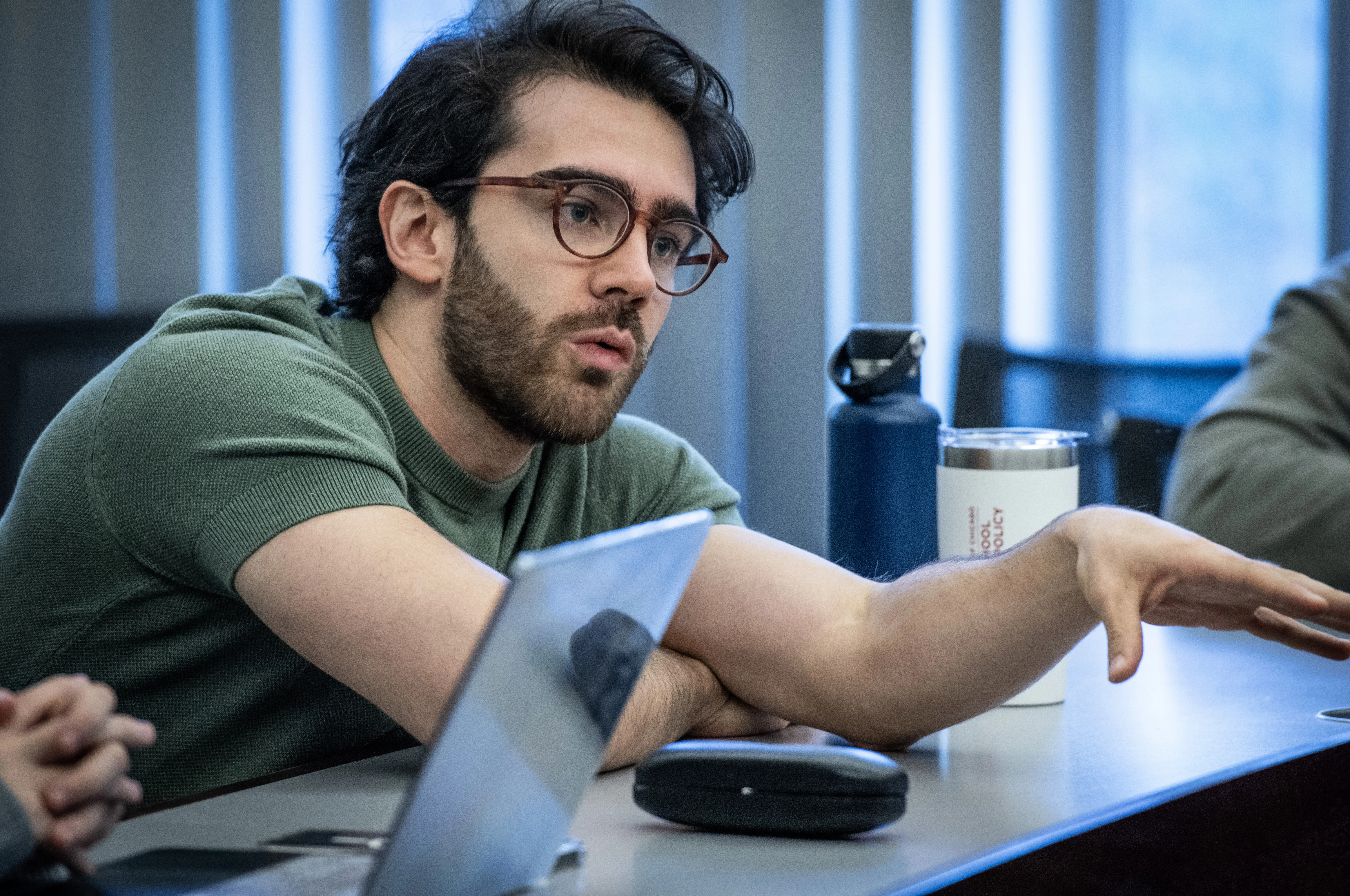
"I feel that a lot of issues in the public sector . . . general inefficiencies, bureaucratic corruption . . . can be solved through artificial intelligence. The possibilities are extremely exciting to me, so I was eager to explore them." Alfredo Taboada, LLM '26
“This technology is transformative and every single lawyer needs to have some understanding of it,” he said. “I did not realize that the barrier of entry is so low; you get good at AI just by literally using it.”
Taboada recalled a team meeting he had at his small law firm in Colombia, back when the technology was just beginning to emerge and attract attention. “We were all concerned that this would be one of these technologies that would give the larger players a bigger advantage and put us smaller fish out of business—but now I believe the opposite. I think AI will be more democratizing and will actually be good for the small actors. I think it has the potential to level the playing field in a way . . . because everyone has access to this technology.”
What's Next
Since its December launch, LeaseChat has been analyzing leases every day and has helped hundreds of people so far. Parker has begun collaborating with a few cities and counties that will refer renters to the tool. He is also working on finding a partner to host and improve the software over time.
The AI Lab will be offered again this fall and will be taught by Parker, who will choose a new access-to-justice challenge for the new cohort to tackle.
“I didn't grow up with AI,” reflected Parker. “It's a tool that I view through the lens of a person who matured using other technology. My students, though, view AI differently. It's the technology they used in undergrad and in their jobs before law school. They are much more AI native. And their view of how to use AI is much more expansive. It was eye-opening for me. Overall, whatever my students got out of the class, I can confidently say that I learned more. It has changed the way I view that technology.”
For the students, the Law School’s AI Lab proved to be more than a class; it was a call to action: those willing to learn, adapt, and lead with technology will have the biggest impact in shaping the future of law and justice. They need only to be curious enough to play in that sandbox called AI.
“This has been my favorite experience at the Law School so far,” reflected McAliley. “It was very nontraditional. I’m so proud of the tool we created.”