Jenner & Block Supreme Court and Appellate Clinic—Significant Achievements for 2024-25
The Jenner & Block Supreme Court and Appellate Clinic represents parties and amici curiae in cases before the US Supreme Court and other appellate courts. Students gain in-depth, hands-on experience in U.S. Supreme Court and other appellate cases, under the supervision of faculty members and members of the Appellate and Supreme Court Practice at Jenner & Block. Students work on all aspects of the clinic’s cases—from formulating case strategy; to researching and writing merits briefs, amicus curiae briefs, and certiorari-stage petitions and briefs; to preparing for oral arguments. The Clinic's co-directors are David A. Strauss, Gerald Ratner Distinguished Service Professor of Law; Sarah M. Konsky, Clinical Professor of Law; and Mattew S. Hellman, co-chair of Jenner & Block's Appellate and Supreme Court Practice. Below are the Clini's significant achievements for 2024-25.
The Jenner & Block Supreme Court and Appellate Clinic represented clients in several significant cases in the U.S. Supreme Court this academic year. The Clinic’s students did important work on each of these cases—from researching legal issues, to assessing potential arguments, to developing case strategy, to drafting and editing briefs.
US Supreme Court Merits Cases
Williams, et al., v. Reed, Case No. 23-191
The Clinic, working alongside attorneys from Jenner and Block and Legal Services Alabama, helped secure a legal victory before the U.S. Supreme Court for unemployment compensation benefits claimants in Alabama.
The claimants had experienced extreme delays and other irregularities in the processing of their unemployment compensation benefits claims. Pet. Br. at 6. They sued the Alabama Secretary of Labor in state court under 42 U.S.C. §1983, arguing that the delays and irregularities violated due process and federal law. Opinion at 1. But the Alabama Supreme Court held that the claimants could not sue under §1983 to challenge delays in the administrative process until they had completed that administrative process. Id.
In an opinion authored by Justice Kavanaugh, a majority of the Court agreed with the claimants that they were not required to exhaust their administrative remedies before bringing these claims under 42 U.S.C. § 1983 in state court. Opinion at 1. As the majority opinion explained:
[The Alabama Supreme Court] ruling created a catch-22: Because the claimants cannot sue until they complete the administrative process, they can never sue under §1983 to obtain an order expediting the administrative process. This Court’s precedents do not permit States to immunize state officials from §1983 suits in that way.
Id. at 1. The Court therefore reversed the Alabama Supreme Court.
The case establishes a significant precedent regarding the burden of entry to bring federal civil rights claims in state court. It establishes an important principle that states cannot create procedural barriers that effectively immunize officials from accountability under federal civil rights laws.
The Clinic became involved in the case at the Supreme Court merits stage, after the Court granted certiorari in the case.
A.J.T. v. Osseo Area Schools, et al., Case No. 24-249.
The Clinic, together with attorneys from Jenner & Block, authored an amicus brief on behalf of the Petitioner in A.J.T. v. Osseo Area Schools, et al, a case involving the rights of students with disabilities in public schools. The Supreme Court unanimously agreed with the position taken by the Clinic in the case.
Petitioner A.J.T. is a teenage girl who suffers from epilepsy that severely limits her physical and cognitive functioning. Opinion at 1. In this case, the lower courts held that her claims of disability discrimination under the Americans with Disabilities Act and the Rehabilitation Act required a showing that school officials acted with “bad faith or gross misjudgment”—a higher standard than applied to disability discrimination claims outside the educational context. Id.
The Clinic’s amicus brief provided important historical background and context for this case. The Clinic’s lead client, former United States Representative Tony Coehlo, has been a key advocate for the rights of individuals with disabilities throughout his career and was instrumental to the passage of the Americans with Disabilities Act of 1990 and other congressional efforts to champion the rights of people with disabilities. The amicus brief explained that both the plain language of the statutes at issue and the long history of these statutory schemes make clear that “children with disabilities bringing claims against their schools under Section 504 of the Rehabilitation Act or the ADA may do so on the same terms as everyone else.” Amicus Brief at 13-14.
In a unanimous opinion authored by Chief Justice Roberts, the Supreme Court reversed the lower court. As the Court explained, “a great many children with disabilities and their parents” together “face daunting challenges on a daily basis.” Opinion at 14. But following the Court’s holding in this case, “those challenges do not include having to satisfy a more stringent standard of proof than other plaintiffs to establish discrimination under Title II of the ADA and Section 504 of the Rehabilitation Act.” Id.
Villarreal v. Texas, Case No. 24-557
The question presented in this case, which currently is pending before the Supreme Court, is “[w]hether a trial court abridges a defendant’s Sixth Amendment right to counsel by prohibiting the defendant and his counsel from discussing the defendant's testimony during an overnight recess.”
The Clinic authored an amicus brief in the case on behalf of leading legal ethics scholars with expertise regarding the rules, precedents, and other authorities regarding the professional responsibility and legal ethics obligations of lawyers.
The amicus brief explained that criminal defense lawyers have a multitude of professional responsibility and ethical duties to their clients during a criminal trial. These duties span from advising clients about developments in the case, to consulting with clients about strategy issues, to addressing false statements in the clients’ testimony. Moreover, as the Supreme Court has recognized, an overnight recess during a criminal trial is a particularly crucial juncture for lawyers’ duties to their clients. See Geders v. United States, 425 U.S. 80, 88 (1976).
The amicus brief explained that a trial court’s order prohibiting lawyers and their client from discussing the client’s testimony during an overnight recess therefore raises significant legal ethics and professional responsibility problems for lawyers. And as a result, when courts interfere with attorney-client communication during this period, they compromise the integrity of the defense function at precisely the moment when it is most needed.
The case will be argued during the Court’s upcoming term.
US Supreme Court Certiorari-Stage Cases
Davis v. Smith, Case No. 24-421
The Clinic was co-counsel for Respondent David Smith in his opposition to the State of Ohio’s petition for certiorari to the Supreme Court. The Supreme Court denied certiorari in the case, over a written dissent authored by Justice Thomas and joined by Justice Alito.
As the Clinic’s brief opposing certiorari explained, it was undisputed in this case that a police offer presented an eyewitness to an attack with a single photo of Mr. Smith, told her Mr. Smith’s name, repeatedly told her that Mr. Smith was the person who attacked her, and repeatedly said other incriminating things about Mr. Smith to her. Despite all of this, the eyewitness did not identify Mr. Smith. Months later, right after the eyewitness was sentenced to probation on her own criminal charges, she again met with the same police officer and identified Mr. Smith for the first time.
When Mr. Smith subsequently was tried for this crime, he moved to suppress the eyewitness’s identification of him based on the corruptive influence of law enforcement’s unduly suggestive procedures. The state trial court denied the motion and the state appellate court affirmed the denial. Mr. Smith then sought habeas relief. A majority of the Sixth Circuit Court of Appeals panel held that Mr. Smith was entitled to a writ of habeas corpus, or in the alternative a retrial, on his claim that the use of this eyewitness identification in his criminal trial violated his due process rights. Judge Thapar dissented from that decision.
The State then sought certiorari from the Supreme Court. The Clinic’s brief opposing certiorari explained that the case did not meet the Court’s criteria for certiorari and did not warrant the Court’s review. The Court denied the petition for certiorari.
The Court has summarily reversed lower courts in numerous cases with similar arguments to those raised in this case. As a result, unlike the great majority of denials of certiorari, this denial was not at all routine. Indeed, in his eight-page dissent from the denial of certiorari, Justice Thomas, joined by Justice Alito, explained:
I would have granted certiorari and summarily reversed. Smith did not make the required showing for habeas relief, and the Sixth Circuit’s analysis blatantly disregards both AEDPA and this Court’s precedents in order to give Smith a regrettable windfall.
Dissent at 7. The dissent further stated that “[t]he decision below is the latest in a long line of Sixth Circuit AEDPA errors” and that “[t]his Court has reversed the Sixth Circuit at least two dozen times for misapplying AEDPA.” Id. Justice Thomas’ dissent garnered attention from media outlets, including in a Law360 article titled “Justice Thomas Slams 6th Cir. In Habeas Petition Dissent.”
* * *
The clinic’s students worked on research and drafting projects in these and other cases, alongside lawyers from the teams.
The students’ work on these cases was in collaboration with and supervised by Clinic faculty members David Strauss and Sarah Konsky, both from the Law School, and Matt Hellman, from Jenner & Block.
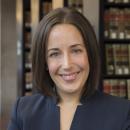
Sarah M. Konsky
Clinical Professor of Law, Director of the Jenner & Block Supreme Court and Appellate Clinic