What's New in UChicago Law's Clinics?

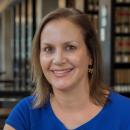
From students arguing cases before the Seventh Circuit to the growing role of artificial intelligence in legal practice, UChicago Law's clinical program continues to evolve. We caught up with Erica Zunkel, director of Clinical and Experiential Learning, to discuss what's new in the clinics, how students are gaining hands-on experience, and what she has learned during her first year as director.
What has changed in the Law School’s clinical program during the last year?
We’ve welcomed new faculty and fellows to the clinics: Lecturer in Law Pete Tarsney, who is leading the Innovation Clinic this year; Nicole Carter, the Jacob Logan Fox Fellow in the Immigrants’ Rights Clinic; and Emma Sperry, the Adams Wiser Family Fellow in the Abrams Environmental Law Clinic. They’ve all brought great energy to the Kane Center.
Could you tell us a little bit about the Law School’s Clinical Fellows Program?
Clinical fellows are early-career lawyers who spend two to three years in our clinics supervising students on real client matters and learning to teach. The fellows allow us to take on more cases and students, expanding our impact, and they bring fresh perspectives. Students with multiple clinical supervisors also see that there is more than one way to approach a case. I’m very excited about building and growing our Clinical Fellows program.
What projects or developments are you particularly excited about right now?
One event I’m really looking forward to is our first-ever Clinic Reception on November 10 for current clinic students and clinical faculty, clinic alumni, and other clinic supporters. This will be a great event, and I hope to see many current and former students there!
Outside of this event, the innovative and impactful work in the clinics continues apace. Many clinics, including my own [the Criminal and Juvenile Justice Clinic], have taken on new cases and projects with our students this academic year. It’s always exciting to watch students dig into new matters.
Given the complexity of the cases our clinics take on, I’m pleased that the experiential credit rules now allow students to take up to 16 credits in most clinics. This lets students dive deeply into the work of a single clinic and receive the kind of experiential education we pride ourselves on providing.
Last year, you talked about UChicago Law’s willingness to entrust clinical students with unusually significant responsibility. What have you seen over the past year that illustrates that?
In the last several months, two clinic students have argued before the Seventh Circuit: Hannah Kessel, ’27, a student in the Employment Clinic, and Deika Albert, ’27, a student in the Jenner & Block Supreme Court and Appellate Clinic. In my clinic’s recent murder trial in June 2026 in which we received a not guilty verdict, Hannah State, ’26, presented the opening statement and several witness examinations and Daniel Egozi, ’26, did the direct examination of a key defense witness. These are just a few examples of students excelling in high-stakes settings under the guidance of clinical faculty.

How do you teach students to use tools like AI while making sure they still develop the essential human skills they will need to be excellent lawyers?
Each clinic approaches this a little differently, depending on the nature of its work, but all of us are working to prepare students to be practice-ready in an AI world without sacrificing learning the core skills. In my clinic, for example, I feel strongly that excellent legal writing is a crucial lawyering skill. It is also hard, and AI can make it much easier. But the iterative drafting students do in clinic, without AI, is how they develop as writers and thinkers. For that reason, my students may not use AI to write a motion or brief. Once we have a draft that we’re happy with, AI can help catch typos and check citations. We also use AI to review the large volume of discovery we receive, a task that can take humans a long time. In my view, those are good uses of AI.
What do you wish more people knew or understood about UChicago’s clinical program?
I wish more people knew that our approach to clinical education mirrors the Law School’s approach to legal education generally: we focus on impact, innovation, and rigor, and we are making a positive difference in our community while training our students to be excellent lawyers.
What advice do you have for students entering the clinics this year on how to make the most of their clinical experience?
Just jump in and embrace all the opportunities to learn from clinical faculty and your fellow students! I think clinic work is most rewarding when you lean in and challenge yourself.
It’s been a little more than a year since you became director of Clinical and Experiential Learning. When you look back on your first year, what are you most proud of and is there anything that surprised you?
I’m not sure I fully understood, before taking on the role, how many different hats the director wears – advocating for and supporting clinic faculty and staff, event planning, HR, development, communications, and keeping the clinics running smoothly, among other things. On top of running my own clinic, it’s been a lot of work, but I’ve truly loved it. I’m proud of what I’ve accomplished in partnership with so many people across the Law School and beyond to better support clinic students, bring the clinical alumni community together, secure more support for the clinics and clinical faculty, and amplify the work being done here.

Lastly, and just for fun, what is an interesting item or decoration you have in your office that holds special meaning for you?
I treasure all of the notes and mementos from my students and clients. To the right of my computer sits a teddy bear from a clinic client who was released early from a long prison sentence and has gone on to get married and live a full life as a free man. He sent me the teddy bear as a token of his thanks, and whenever I look at it, I smile.