Jenner & Block Supreme Court and Appellate Clinic—Significant Achievements for 2025-26
The Jenner & Block Supreme Court and Appellate Clinic represented clients in several significant cases in the U.S. Supreme Court and the U.S. Court of Appeals for the Seventh Circuit this academic year. The Clinic’s students did important work on each of these cases—from researching legal issues, to analyzing and formulating arguments, to developing case strategy, to drafting and editing briefs.
US Supreme Court Merits Cases
Chatrie v. United States, Case No. 25-112
The Clinic helped secure a landmark win in Chatrie v. United States, a U.S. Supreme Court case holding that accessing a person’s location data in the cloud is a “search” under the Fourth Amendment, requiring law enforcement to obtain a warrant satisfying the Constitution’s probable cause and particularity requirements. The Clinic was co-counsel for Petitioner Okello Chatrie.
At issue in the case was whether “geofence warrants” requiring technology companies to turn over individuals’ geolocation data are searches subject to Fourth Amendment protections. In a 6-3 ruling, the Supreme Court held that they are, remanding the case to a lower court to determine whether the search satisfied the Fourth Amendment’s requirements.
Writing for the majority, Justice Kagan’s opinion explained that cell phone location data provides a “fine-tuned picture of a person’s movements.” See Op. at 16. “Access to that record enables officials to undertake a nearly-perfect, retrospective surveillance of countless persons and places.” Id. at 25. Thus, the Court held, “police officers invade a cell-phone user’s reasonable expectation of privacy when they access his Location History.” Id. at 29.
Investigators typically use geofence warrants to identify unknown suspects at the scene of a crime. They do this by defining a geographic area and time window and requesting that tech companies provide cell phone location data that can help pinpoint who was present within the “geofence” at the time of the crime.
This case centered on a geofence warrant served on Google by law enforcement following a 2019 armed robbery of a federal credit union. Using the warrant, police compelled Google to produce location data for every device within a 150-meter radius of the bank during a one-hour window around the robbery—without identifying a specific suspect. Police then compelled Google to turn over additional location data outside the 150-meter radius for certain devices. The data led officers to Mr. Chatrie, who was subsequently charged with bank robbery.
The team representing Chatrie was led by the clinic’s partners at Jenner & Block. Jenner partner Adam Unikowsky was lead counsel and argued the case in the Supreme Court.
The Court’s opinion marked a significant precedent in Fourth Amendment law. It affirmed that individuals retain a reasonable expectation of privacy in their cell phone location history and rejected the argument that users forfeit their privacy simply by using location-sharing services. As the Court explained, while the technologies at issue in this case are new, “the Fourth Amendment must, as ever, protect against unjustified governmental intrusion on the privacy of the individual.” Op. at 33.
Villarreal v. Texas, Case No. 24-557
The question presented in this case was “[w]hether a trial court abridges a defendant’s Sixth Amendment right to counsel by prohibiting the defendant and his counsel from discussing the defendant’s testimony during an overnight recess.”
The Clinic authored an amicus brief in the case on behalf of leading legal ethics scholars with expertise regarding the rules, precedents, and other authorities regarding the professional responsibility and legal ethics obligations of lawyers.
The amicus brief explained that criminal defense lawyers have a multitude of professional responsibility and ethical duties to their clients during a criminal trial. These duties span from advising clients about developments in the case, to consulting with clients about strategy issues, to addressing false statements in the clients’ testimony. Moreover, as the Supreme Court has recognized, an overnight recess during a criminal trial is a particularly crucial juncture for lawyers’ duties to their clients. See Geders v. United States, 425 U.S. 80, 88 (1976).
The amicus brief explained that a trial court’s order prohibiting lawyers and their client from discussing the client’s testimony during an overnight recess therefore raises significant legal ethics and professional responsibility problems for lawyers. And as a result, when courts interfere with attorney-client communication during this period, they compromise the integrity of the defense function at precisely the moment when it is most needed.
In an opinion authored by Justice Jackson, the Supreme Court held that the conferral order in the case provided only that the attorneys “could not manage [the defendant’s] ongoing testimony in light of the testimony he had already given,” and that the conferral order thus “did not ban or impermissibly chill constitutionally protected consultation.” Op. at 14. The majority opinion cited the amicus brief authored by the Clinic for the proposition that “[c]onsultation about testimony itself—practicing it, debriefing it, and the like—is a recognized, distinct tool in every trial lawyer’s preparatory arsenal.” Op. at 13.
US Supreme Court Certiorari-Stage Cases
Hadley v. City of South Bend, Case No. 25-1158
Pena v. City of Los Angeles, Case No. 25-1163
In these two cases, law enforcement officers deliberately damaged the property of innocent individuals while carrying out law enforcement activity. The Fifth Amendment’s Takings Clause was “designed to bar Government from forcing some people alone to bear public burdens which, in all fairness and justice, should be borne by the public as a whole.” Tyler v. Hennepin County, 598 U.S. 631, 647 (2023) (quoting Armstrong v. United States, 364 U.S. 40, 49 (1960)). The petitions for certiorari in these two cases raise related questions about whether property destruction by law enforcement is excluded from the Taking Clause’s just compensation requirements. Both petitions are pending.
The Clinic authored an amicus brief in the Hadley case and an amicus brief in the Pena case on behalf of individuals who, through no fault of their own, had their homes severely damaged by law enforcement SWAT raids intended to apprehend criminal suspects. Amici live in circuits that have held that the Takings Clause categorically would not apply to the government’s destruction of their homes. Pena v. City of Los Angeles, 158 F.4th 1033, 1048 (9th Cir. 2025); Lech v. Jackson, 791 F. App’x 711, 712 (10th Cir. 2019). Had amici happened to live in other parts of the country, however, the government destruction of their homes could give rise to a claim under the Takings Clause.
As amici’s stories illustrate, law enforcement officers’ destruction of homes and other property is an important and recurring problem affecting innocent homeowners across the country. To be sure, in some cases, SWAT and other raids may be warranted or necessary to protect the public or achieve other important government purposes. But at the same time, as amici’s stories illustrate, law enforcement raids can leave homes severely damaged, if not altogether destroyed. As a result, uncompensated raids can impose significant or even crippling costs on innocent homeowners.
Seventh Circuit Appellate Cases
United States v. Shelton, Case No. 25-2661
The Clinic was appointed to represent Defendant-Appellant Bradley Shelton in the direct appeal of his criminal conviction, after a federal jury found him guilty of one count of conspiracy to distribute a controlled substance and one count of distribution of a controlled substance in violation of federal law.
As Shelton argued in his reply brief in the appeal:
The government attempts to cast Shelton’s minimal and ambiguous conduct as knowing participation in a drug conspiracy. But the government’s arguments cannot obscure the fundamental weakness in its case: the absence of evidence that Shelton knew of, much less agreed to join, the charged conspiracy . . . . As the government’s own cases make clear, a conspiracy conviction requires “substantial evidence that a particular defendant knew of the illegal objective of the conspiracy and agreed to participate in its achievement.” United States v. Burrell, 963 F.2d 976, 987 (7th Cir. 1992); see also United States v. Avila, 557 F.3d 809, 814 (7th Cir. 2009) (the government bears the burden of affirmatively showing that the defendant “knowingly and intentionally joined in the agreement”) . . . .
Both the government’s and the district court’s misapplication of this Court’s precedents regarding conspiracy permeated Shelton’s case and his trial. And as a result, the district court made three separate errors that are grounds for acquittal or reversal.
This appeal has not yet been argued and remains pending.
The students’ significant and important work on these and other cases was in collaboration with and supervised by Clinic faculty members David Strauss and Sarah Konsky, both from the Law School, and Matt Hellman, from Jenner & Block.
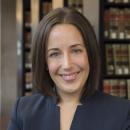
Sarah M. Konsky
Clinical Professor of Law, Director of the Jenner & Block Supreme Court and Appellate Clinic