Abrams Environmental Law Clinic—Significant Achievements for 2025-26
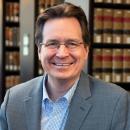
The Abrams Environmental Law Clinic attempts to solve some of the most pressing environmental problems throughout Chicago, the State of Illinois, and the Great Lakes region. On behalf of clients, the clinic challenges those who pollute illegally, fights for stricter permits, advocates for changes to regulations and laws, holds environmental agencies accountable, and develops innovative approaches for improving the environment. The Clinic is directed by Clinical Professor Mark N. Templeton. Below are the Clinic's significant accomplishments for 2025-26
Energy and Climate
Energy Justice
The Abrams Clinic supported grassroots organizations advocating for energy justice in low-income communities and communities of color in Michigan. With the Clinic’s representation, these organizations intervened in cases before the Michigan Public Service Commission (MPSC), which regulates investor-owned utilities. Students conducted discovery, drafted written testimony, cross-examined utility executives, and filed briefs for these projects. The Clinic has elevated the concerns of these community organizations and forced both utilities and regulators to consider access to renewable energy and equity issues to an unprecedented degree. This year, on behalf of Soulardarity (Highland Park, MI), We Want Green, Too (Detroit, MI), and Urban Core Collective (Grand Rapids, MI), Clinic students engaged in five contested cases before the MPSC against DTE Electric, DTE Gas, and Consumers Energy, as well as two cases before the Michigan Court of Appeals, and provided support for our clients’ advocacy in other non-contested MPSC proceedings.
After years of advocacy and litigation by the Clinic and its clients, the Michigan Public Service Commission adopted on June 11, 2026, a six percent-of-income target for energy costs for Michigan residential customers receiving financial assistance with their energy bills. In numerous rate cases, the Clinic, its clients, and its expert witnesses have demonstrated that hundreds of thousands of Michiganders cannot afford their energy bills, that the gap between what they can afford and their energy bills totals approximately a billion dollars, and that existing assistance programs close significantly less than half that gap. In conjunction with adopting the six-percent target, the Commission set a January 2027 deadline for utilities, Commission staff, and stakeholders to implement changes to make it easier for more Michiganders to access assistance programs and develop new programs to better address the excessive energy burden faced by too many customers.
While the Commission has adopted this target for assistance programs, it continues not to acknowledge its legal responsibility to consider affordability in rate cases; thus, the Clinic filed an appeal before the Michigan Court of Appeals asking the Court to require the Commission to assess the affordability of rates and proposed rate increases before approving them. In its briefing, the Clinic argues that Michigan law and federal precedent require the Commission to set just and reasonable rates based on a balancing of investor and consumer interests, that the Commission did not demonstrate that it considered cost and value of service to the consumer when conducting that balancing, and that the Commission’s order was procedurally and legally deficient.
In this appeal, the Clinic also challenged the Commission’s approval of DTE Electric’s recovery of trade association dues. The Clinic argued that because DTE Electric had not provided sufficient evidence that the association contributions led to ratepayer benefits, the Commission should not allow DTE Electric to recover those dues. In addition, the Clinic argued that, because at least some ratepayers disagree with the advocacy positions of these trade associations, making these ratepayers contribute to these organizations through their dues amounts to compelled speech in violation of the First Amendment to the U.S. Constitution. While these questions are being ligitated before the appellate court, the Clinic’s arguments in various dockets persuaded the Commission to require DTE Electric to provide more information about expenditures on electoral campaigns, advertising, marketing, lobbying, trade associations, and 501(c)(3) and 501(c)(4) non-profits and did persuade the Administrative Law Judge (ALJ) to reject approximately $100,000 of American Gas Association dues.
The Clinic also advocated for several additional clients’ concerns in other cases. For example, in the DTE Gas rate case, the Clinic argued that the Company overstated new customer growth, that it needed to better incorporate environmental justice considerations into its infrastructure planning, and that it needed to plan better for a societal transition away from gas toward electricity. In the DTE Electric rate case, the Clinic drew attention to the impacts of poor and disparate reliability on the well-being of low-income customers and of unregulated programs, such as home protection programs, on customers’ bills. In the Consumers Energy Electric case, the Clinic advocated for changes to the company’s shutoff practices that disproportionately impact racial minority customers; for transparency and reporting on investments to improve reliability in environmental justice communities; and for improved engagement with low- to moderate-income and environmental justice communities. While the Commission did not ultimately adopt all of the requested relief, this advocacy nevertheless educated the Commission, its staff, the utilities, other intervenors, and the public about the importance of these issues and laid the groundwork for future action.
In addition, in a case in which Consumers Energy Electric company sought approval for a community solar program, the Clinic advocated for transparency in overinflated administrative fees, support for low-income subscribers, compensation for subscribers for savings on transmission costs, and the disallowance of a financial compensation mechanism that would provide an unjust profit to the utility. In the Proposal for Decision, the Administrative Law Judge agreed with many of the Clinic’s points, including on the fee pricing structure and compensation for reduced transmission costs. This is a major step forward after years of advocacy for community solar that works for low-income residents in Michigan, though many hurdles remain.
Finally, the Clinic supported its clients and other Michigan ratepayers in other ways as well. For example, it helped its clients secure grants from the Michigan Utility Customer Participation Board to participate in cases; it supported them in conversations with utilities about pilot projects; and it advocated to the Commission for new protections for customers during periods of extreme heat. Throughout this work, the students took leading roles conducting discovery, interviewing witnesses, drafting testimony, researching legal arguments, writing briefs, cross-examining witnesses, and advising clients.
Climate
Nine clinic students authored an amicus brief in the U.S. Court of Appeals for the Ninth Circuit in Lighthiser v. Trump, a constitutional climate case brought by Our Children's Trust on behalf of twenty-two young people challenging three of President Trump's executive orders that direct agencies to abandon climate action, accelerate fossil-fuel development, and expand coal use. Organized by former White House Chief of Staff John Podesta, the brief represented a bipartisan group of thirteen former senior federal officials, including, among them, former EPA Administrators and Secretaries of the Departments of Interior, Energy, and Housing and Urban Development, whose government service spanned five presidential administrations. Drawing on the amici’s own experience, the brief rebutted the district court’s concern that an injunction would be unworkable, showing that executive officials have the knowledge and the constitutional duty to comply with orders enjoining executive action and have done so across administrations by rescinding regulations, pausing rulemakings, and adjusting policies. It further demonstrated that courts have long exercised their authority to enjoin unlawful executive action without engaging in policymaking or monitoring compliance.
Clinic students also drafted a comprehensive report for a major international NGO on the international legal landscape governing marine carbon dioxide removal (mCDR). mCDR encompasses a variety of techniques that remove carbon dioxide from the air and store it in the ocean; many experts believe that, even with aggressive mitigation action, carbon dioxide removal is necessary to keep a goal of no more than 1.5 degrees Celsius of warming within reach. Student clinicians researched mCDR technologies and how different international bodies have or have not expressed interest in attempted to govern research of mCDR . For the report, clinic students synthesized how mCDR relates to nine multilateral fora, four regional bodies, two judicial bodies, and customary international law. Students also took a particular focus on how information regarding climate impacts and environmental protection can be siloed across treaty bodies, and mechanisms for better collaboration through information sharing.
Endangered Species
The Clinic represented the Center for Biological Diversity (CBD) in litigation regarding the U.S. Fish and Wildlife Service’s (FWS) failure to list the Brooke Floater Mussel as threatened or endangered under the Endangered Species Act (ESA). The mussel is a small, strictly riverine species of mussel historically native to the east coast of the United States and Canada in an area referred to as the Atlantic slope. Development and climate change have undermined large portions of the mussel’s habitat, and populations are declining. Accordingly, the Clinic sued FWS in the U.S. District Court for the District of Columbia last spring over the Service’s denial of CBD’s request to have the Brooke Floater Mussel protected. In February 2026, CBD and FWS approved a settlement that required the government to revisit is negative endangerment finding.
The Clinic also represented the CBD in administrative proceedings regarding FWS’s failure to list the Lake Sturgeon as threatened or endangered. The lake sturgeon is a large, ancient fish historically abundant across the eastern and central United States and Canada, once among the most common native species in the Great Lakes. Commercial overfishing, dam construction, climate change, and other human activities have reduced the species to roughly one percent of its historical abundance, with more than half of its U.S. range no longer supporting self-sustaining populations. Accordingly, the Clinic sent FWS a sixty-day Notice of Intent to Sue in April 2026 over the Service’s April 2024 denial of CBD's request to have the Lake Sturgeon protected, arguing that FWS acted arbitrarily and capriciously by ignoring genetic evidence of distinct population segments, mishandling climate change science, over-relying on stocking as a conservation measure, and failing to adequately account for the species' dramatically contracted historical range.
Lastly, the Clinic assisted CBD in a Ninth Circuit appeal regarding FWS’s determination that listing a distinct population segment of gray wolves in the western United States as endangered or threatened is not warranted. Specifically, the Clinic’s research focused on the Service’s failure to properly consider a “significant portion” of the range because the Service’s analysis solely focused on the wolf’s current range, not its historic range. CBD filed this case in June 2024 after the Service delisted the gray wolf throughout the United States, removing protections that had been in place since 1978.
Land Contamination and Hazardous Water
The Clinic continues to represent East Chicago, Indiana, residents living on or adjacent to the U.S.S. Lead Superfund site. This year, the Clinic researched and wrote a report on the hazardous waste treatment activities of Tradebe Treatment and Recycling, LLC (Tradebe). Facility reports from the U.S. Environmental Protection Agency’s (EPA) Toxic Release Program (TRI) indicate that Tradebe is the leading emitter and handler of hazardous waste in Lake County, when adjusted for risk. U.S. EPA and the Indiana Department of Environmental Management (IDEM) have notified the company of hundreds of violations in the past five years. These violations formed the basis of the Clinic’s report, which also covered the history of hazardous waste regulation, the health effects of hazardous waste exposure, a profile of the environmental justice community of East Chicago, the major provisions of the Resource Conservation and Recovery Act (RCRA, the federal hazardous waste statute), graphs and charts showing significant trends in Tradebe’s RCRA violations, problems with how Tradebe is being regulated, and recommendations for how to improve that regulation in order to decrease Tradebe’s violations. Clinic students also researched companies and organizations that currently send hazardous waste to Tradebe.
Protecting Our Great Lakes, Rivers & Shorelines
The Clinic represents Friends of the Chicago River and the Sierra Club in their efforts to hold the operator of one of downtown Chicago’s largest buildings accountable for illegally withdrawing water from the Chicago River. In May 2025, the facility’s operator, the State, and Plaintiff-Intervenors entered into a proposed consent order to resolve the case. The facility’s operator agreed to cease its illegal killing of aquatic life, bring its water intake structure into compliance with the Clean Water Act (CWA), and pay $1.5 million in penalties to the State, $300,000 in attorneys’ fees, and $3 million toward a Supplemental Environmental Project (SEP). In academic year 2025–26, the Clinic supported Friends of the Chicago River in administering and implementing the SEP to create new fish habitat in the Chicago River and mitigate the harm to fish and other aquatic life caused by years of violations.
The Clinic represents the Sierra Club and Prairie Rivers Network in their lawsuit against Pacific Ethanol Pekin, LLC (now Alto Pekin, LLC), the operator of an ethanol refinery in Pekin, Illinois, for repeatedly exceeding its permit limits on temperature, chlorine, and ammonia to the detriment of fish, wildlife, and the people who use the river. The Clinic’s initial notice of intent to sue over these violations triggered the Illinois Attorney General’s lawsuit against the operator, in which the Clinic’s clients intervened. In May 2026, Pacific Ethanol, the State, and Plaintiff-Intervenors entered into a proposed consent order to resolve the case. The operator agreed to bring its discharges into compliance with the CWA, cease further violations, pay a $75,000 penalty to the State, and fund a $125,000 Supplemental Environmental Project (SEP) that will fund Ducks Unlimited to replace a water control structure in the Emiquon National Wildlife Refuge, restoring natural water management across approximately 320 acres of wetlands and enhancing habitat for waterfowl and other wildlife.
Legislation
The Clinic proposed raising Illinois's maximum civil penalties for environmental violations, which lagged behind comparable federal penalties and had been eroded by decades of inflation. The Illinois Environmental Council (IEC) took up the proposal and advocated for its passage. In the summer of 2025, Governor Pritzker signed Public Act 104-0006, which doubled the maximum civil penalties under the Illinois Environmental Protection Act to $100,000 per violation and $25,000 for each day a violation continues and tied those maximums to annual inflation beginning in 2026. Together, these changes restore the deterrent value of Illinois's environmental penalties and preserve them over time, strengthening the State's ability to deter illegal pollution.
Students and Faculty
Twenty-nine law school students from the classes of 2025 and 2026 participated in the Clinic, as well as four undergraduates. Law students secured thirteen clerkships, and nine are heading to private practice after graduation. Clinic Director Mark Templeton continues his service on the boards of the Environmental Law Institute (ELI), the Conservation and Policy Council of the Forest Preserves of Cook County, and the Gaylord and Dorothy Donnelley Foundation. With the Environmental Law and Policy Center, Director Templeton served as co-organizer and co-convenor of the first annual Midwest Public Interest Environmental Litigators’ Conference in May. He spoke at events for the American Waste Management Association and the Energy Foundation, and he moderated a discussion with environmental justice pioneer Charles Lee. Clinic Fellow Jake Schuhardt served on the Illinois State Bar Association’s Environmental and Natural Resources Law Section Council. Clinical Fellow Alexandria Miskho published a paper at the tenth anniversary of the Paris Agreement outlining the implications of the United States’s withdrawal from the Paris Agreement.